In this article
Have you ever heard that your ads are only as strong as your buyer persona? It's probably not a topic that comes up at the dinner table, but for marketers, it's one of the most important foundations of a successful advertising strategy.
A buyer persona is a research-based representation of your ideal customer. It combines demographic information, behaviors, motivations, goals, and pain points to help marketers better understand who they're trying to reach. When used effectively, buyer personas can improve everything from audience targeting and ad creative to conversion rates and return on ad spend.
In this guide, we'll break down what a buyer persona is, why buyer personas matter for paid media, and how to create buyer personas that help drive stronger advertising performance.
What is a buyer persona?
A buyer persona is essentially a summary of who your ideal customer is, written in their own voice (i.e., first-person, using their style). It should capture both who they are and why they make purchasing decisions.
What should a buyer persona include?
While every business is different, most buyer personas should include:
- Demographic information (age, location, occupation, income level)
- Interests and lifestyle characteristics
- Goals and motivations
- Pain points and challenges
- Buying behaviors and decision-making habits
- Preferred marketing channels and platforms
- Common objections or concerns before purchasing
The more clearly you understand these characteristics, the easier it becomes to create advertising that resonates with the right audience.
Example buyer persona – wine subscription brand
Hi, I'm Henry, a 45-year-old father of two and husband of one. I live in Columbus, OH, where I work as a sales executive for a multinational company.
My job is very time consuming, and there is a lot of traveling involved. I often find myself with some free time during these trips, during which I love to explore local destinations and cuisine.
Recently, I had to travel to California. One of my colleagues suggested we stay for an extra day to visit Napa. On a wine tour with an expert guide, I was amazed by the Napa flavors: they were nothing like I had tasted before.
After coming home from that trip, I wouldn't shut up about it—my family and friends must have heard how wine is made about a thousand times. I wanted to repeat that experience, but with a time-consuming and travel-intensive job, my dreams of being an amateur Napa sommelier needed to fit into the time I had at home with my family.
I knew exactly which type of wine was for me, but I quickly ran into a problem: access. It was really hard to find high-quality wine online. I ordered from different websites, but I was never fully pleased with what I was receiving. Most places didn't provide enough information about what I was buying, or the wine didn't arrive in great condition.
I want to be able to access the wines I like, discover new flavors that amaze me, and grow my collection—from Ohio.
Buyer persona vs. target audience
A buyer persona and a target audience are closely related, but they're not the same thing.
A target audience is a broader group of people you want to reach. For example, a wine subscription brand's target audience might be adults ages 35-55 who enjoy premium wines.
A buyer persona takes that audience and turns it into a detailed individual. Instead of marketing to a broad category, you're marketing to Henry—a busy sales executive who discovered a passion for wine while traveling and wants convenient access to premium bottles at home.
This level of detail helps marketers create more relevant messaging and stronger advertising campaigns.
Why are buyer personas important for paid media?
Understanding your audience is one of the most important parts of building successful advertising campaigns. Without a clear picture of who you're trying to reach, it's difficult to create messaging that resonates, choose the right platforms, or spend your advertising budget efficiently.
That's where buyer personas come in.
A strong buyer persona helps marketers move beyond assumptions and make decisions based on a deeper understanding of customer motivations, behaviors, and needs. Whether you're running campaigns on social media, search engines, video platforms, or other paid media channels, buyer personas can help improve performance at every stage of the funnel.
More effective ad creative
The most effective ads speak to a customer's goals, frustrations, and motivations.
When marketers understand what their audience cares about, they can create stronger headlines, more compelling offers, and creative that feels relevant rather than generic. These audience insights also provide a stronger foundation for ad testing, making it easier to identify which messages, hooks, and value propositions resonate most with potential customers.
For example, Henry isn't just looking to buy wine. He's trying to recreate an experience he loved and discover new wines without the hassle of traveling to Napa. Ads that speak to those motivations are likely to perform better than ads that only focus on product features.
Better audience targeting and platform selection
Buyer personas help marketers understand where their audience spends time online, how they consume information, and what influences their purchasing decisions.
Understanding your ideal customer's interests, behaviors, and habits can inform audience targeting strategies across paid media channels and help ensure your ads are reaching the people most likely to convert.
Not every customer spends time in the same places. Some audiences respond best to short-form video content, while others prefer search-driven research or professional networking platforms. A strong buyer persona can help marketers determine which advertising platforms are right for their business, allowing teams to focus their efforts where they're most likely to drive results.
More efficient ad spend
Advertising budgets are wasted when campaigns try to appeal to everyone.
Buyer personas help narrow your focus so that creative, messaging, and targeting are aligned around the people most likely to become customers. This will lead to more efficient campaigns and a better return on ad spend.
Higher conversion rates
When ads address a customer's needs, concerns, and motivations, they’re better positioned to capture attention and drive action.
From the first impression to the final purchase decision, buyer personas help create more relevant customer experiences—which can ultimately lead to higher engagement, more conversions, and stronger campaign performance.
Identifying customer questions and objections
One of the most valuable outcomes of building a buyer persona is uncovering the questions customers ask before making a purchase. Understanding these questions helps marketers create ads, landing pages, and content that address concerns early in the customer journey.
For our wine subscription example, those questions might include:
- What is this wine subscription service?
- How is this different from buying wine at a store?
- What happens if I don't like the wine?
- How much does it cost?
- Are there any limited-time offers?
- How does the subscription work?
- What are the benefits of becoming a member?
- Where are the wines sourced?
- What is the quality of the wine like?
- Can it be delivered directly to my door?
Ads that address these questions can help build trust and move potential customers closer to a purchase.
How does a persona relate to customer decision-making?
Ernest Hemingway coined the term "Iceberg Theory." The idea is that information has two parts: what people can see and what exists beneath the surface.
Above the surface are the visible details—words, actions, behaviors, and decisions. Beneath the surface are the underlying emotions, fears, desires, beliefs, and values that influence those decisions.
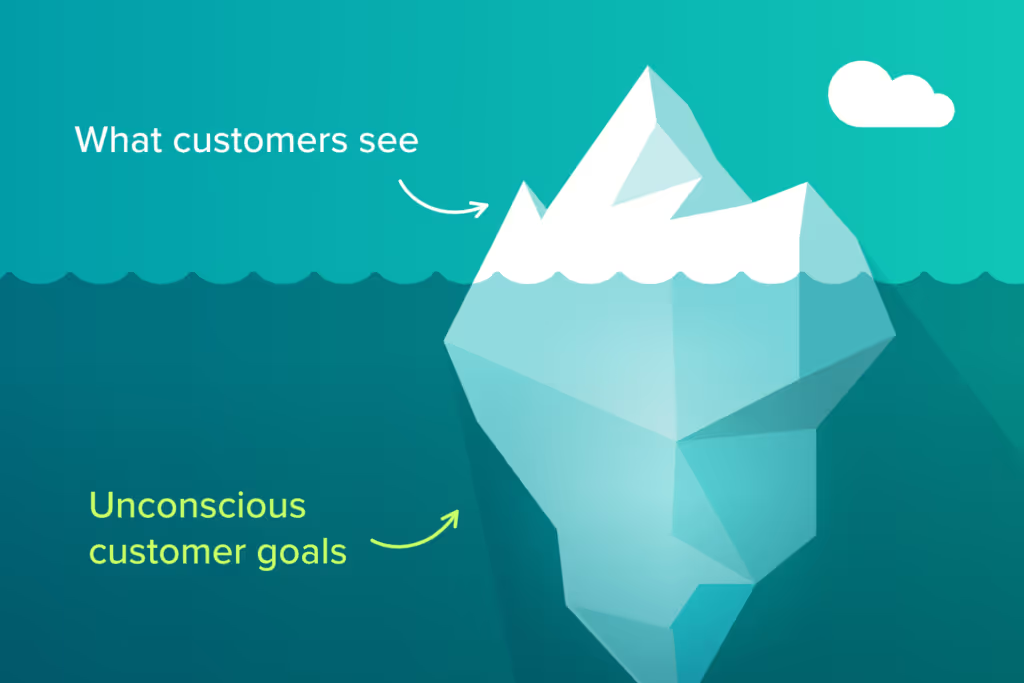
We can use this same concept when thinking about advertising.
At the top of the advertising iceberg is what customers see: headlines, images, videos, offers, and calls to action. Beneath the surface are the motivations that drive someone to engage with an ad, click through to a website, or make a purchase.
If your advertising only addresses what customers do without understanding why they do it, your messaging is likely to miss the mark. Strong buyer personas help uncover those deeper motivations so marketers can create campaigns that resonate on a more meaningful level.
The pursuit of pleasure and the avoidance of pain
Many purchasing decisions are influenced by two powerful forces:
- The pursuit of pleasure
- The avoidance of pain
People are often motivated by a desire to achieve a positive outcome or avoid a negative one. When developing a buyer persona, consider questions like:
- What positive outcome does this customer hope to achieve?
- What problem are they trying to solve?
- What frustrations are they experiencing today?
- What concerns or risks might be preventing them from taking action?
- How could this product or service make their life easier, better, or more enjoyable?
For Henry, purchasing wine is about more than the product itself. He wants to recreate an experience he loved, discover new wines, and enjoy a hobby despite a busy schedule.
That's an important distinction.
A product-focused message might emphasize wine selection or shipping speed. However, a persona-driven message speaks to the emotional outcome: bringing the Napa experience home.
Understanding the motivations beneath the surface can transform a good buyer persona into a great one—and help marketers create advertising that connects with the people they're trying to reach.
How to create strong buyer personas: 6 tips
Now that we've covered what a buyer persona is and why it matters, let's look at how to create buyer personas that can actually improve advertising performance.
The strongest buyer personas are built on research, customer insights, and a clear understanding of what motivates people to buy, instead of assumptions.
1. Conduct customer research
Rather than guessing what your customers care about, gather insights from them directly. Some effective research methods include:
- Customer interviews
- Surveys and questionnaires
- Focus groups
- Product reviews and testimonials
- Customer support conversations
- Social listening on platforms like Reddit, Facebook groups, and industry forums
Pay close attention to the language customers use to describe their goals, frustrations, and experiences. These insights can help shape your buyer personas, as well as your advertising messaging and creative strategy.
2. Analyze your website and marketing data
Your existing data can reveal valuable information about your audience. By analyzing first-party data—information collected from your customers and prospects—you can better understand how people discover, evaluate, and purchase your products.
Review sources such as:
- Google Analytics
- CRM data
- Customer purchase history
- Email marketing performance
- Paid media platform insights
- Website behavior and conversion data
Look for patterns in demographics, interests, customer journeys, and purchasing behavior. Understanding who converts—and why—can help you build more accurate buyer personas and create more relevant advertising.
3. Identify pain points and motivations
Go beyond surface-level demographic information by asking yourself:
- What problem is this customer trying to solve?
- What frustrations are they experiencing today?
- What outcome are they hoping to achieve?
- What would motivate them to take action?
The answers to these questions will reveal the emotional drivers behind purchasing decisions. Understanding those motivations helps marketers create messaging that resonates on a deeper level.
4. Document common questions and objections
Before making a purchase, customers almost always have unanswered questions like:
- Is this product worth the cost?
- Will it solve my problem?
- Is it better than competing options?
- Can I trust this company?
Documenting these questions helps marketers anticipate objections and proactively address them through ad creative, landing pages, email campaigns, and other marketing assets.
5. Revisit and refine your personas regularly
Buyer personas shouldn't be treated as static documents.
Customer preferences change. New competitors enter the market. Advertising platforms evolve. Products and services grow over time.
Review your buyer personas regularly and update them as new customer insights become available. This will help ensure your marketing and advertising strategies stay aligned with your audience's needs.
6. Start small
You don't need a dozen buyer personas to get started. Prioritize quality over quantity by focusing on your most important customer segments first.
As your business grows, you can expand and refine your buyer personas to reflect new audience segments and opportunities. One well-researched buyer persona is far more valuable than multiple profiles built on assumptions.
Turn customer insights into better advertising
Strong buyer personas help marketers understand who they're trying to reach, what motivates them, and how to communicate more effectively. When used correctly, buyer personas can improve everything from ad creative and audience targeting to conversion rates and return on ad spend.
The most successful advertising campaigns are based on real customer insights, not assumptions. By combining research, analytics, and a deeper understanding of customer motivations, marketers can create messaging that resonates and drives meaningful business results.
At Primer, we help brands turn customer insights into high-performing paid media campaigns through audience research, creative strategy, testing, and optimization.
Ready to improve your paid media performance? Contact us to start the conversation.
.avif)
.avif)
.avif)
.avif)
.avif)
.avif)
.avif)



%2C%20Color%3DNegative.svg)
.svg)