In this article
We at Primer attended this year’s Make Ads That Convert event hosted by Motion and came back with fresh insights on what makes a top-performing ad today.
No surprises that AI was the top topic of conversation. AI is everywhere in the creative process. Just give it a few words and it’ll do magic. Static ads? With a good prompt, it’ll make a high-converting image in seconds… or create briefs or even edit videos… it has become key in the creative process of ad development—but it won’t replace the human behind a successful ad. As Alex Cooper said in the very beginning of his speech: “Creative strategists won’t be replaced by AI. They’ll be replaced by another creative strategist using AI better than them.”
For today’s blog, we are going to dive deeper into AI in the creative process: how to become great at research, how to scale your ads by using effective prompts, how to mix AI and UGC in an ad and much more. Let’s go!
Research: Old Way vs. New Way
Did you know that 90% of bad ads start with bad research?
This means a bad ad is not about a poor choice of footage or a terrible script. It’s something deeper: A bad ad is caused by not fully understanding what your product is, why it sells, what pain points it solves and more.
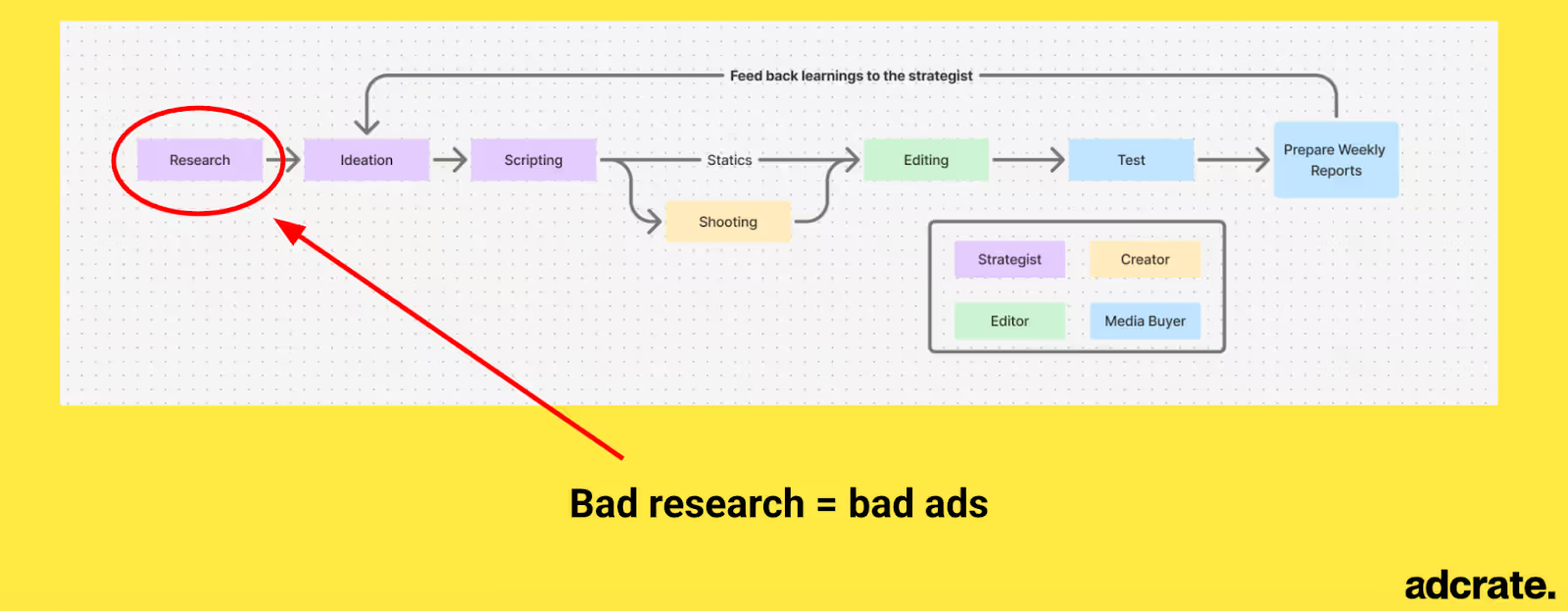
Before you start creating your ad, you need as much information as possible. Do your research, but not just on a surface level—go deeper.
Ask questions. Talk to the AI like you are a consumer. Go into Reddit and start looking for your brand, product and more. Spy on your competitors. Go through social media and read comments and try to find that good review that’s a golden nugget. All those steps are essential parts of the research that will become a high-converting ad.
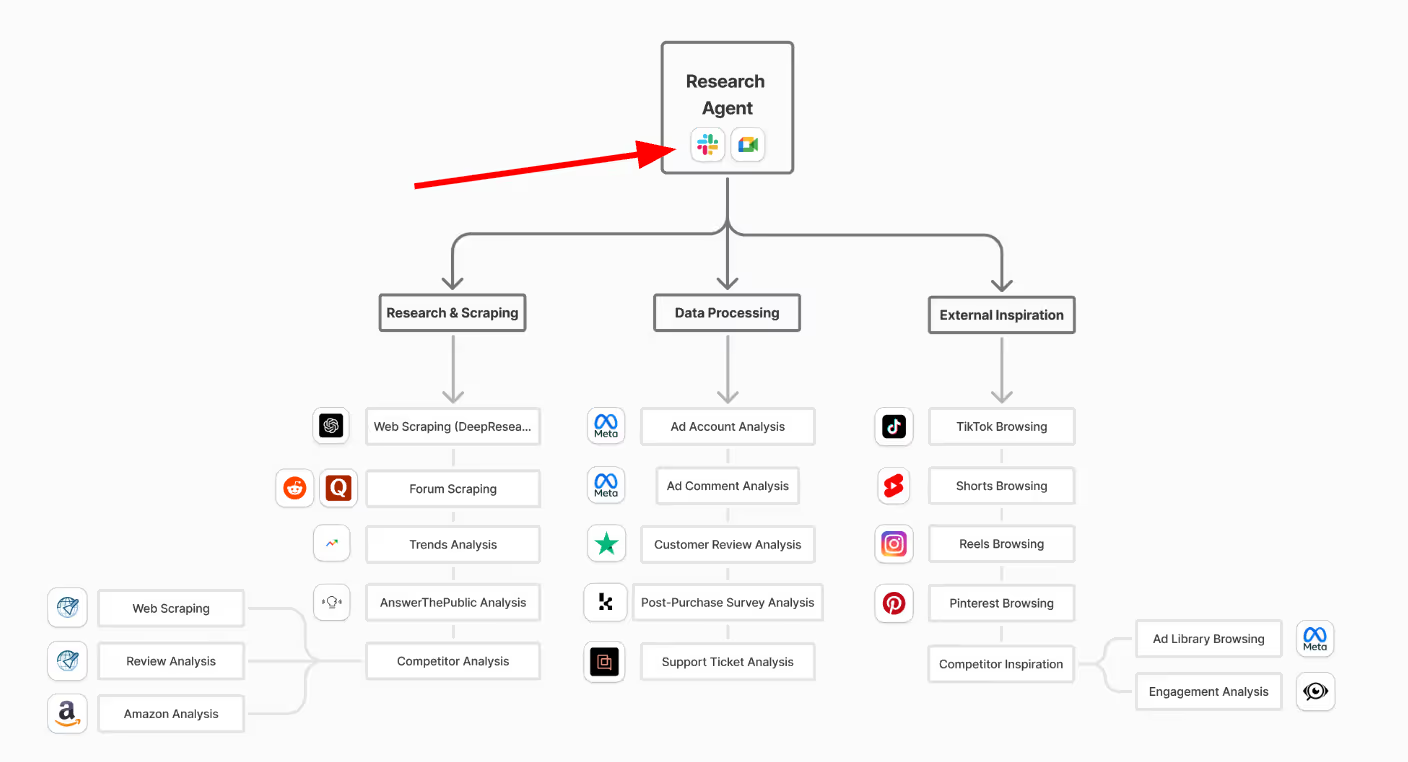
This is what great research looks like. As you add all the tools to your Chrome extension or Slack, start asking questions and go deep in social media, you’ll have all this valuable information and crafting your ad will be easier. The key? A great prompt.
We now live in a prompt-first world, and the more exact your prompt to ChatGPT, Claude, or other LLMs is, the better results you’ll get. Knowing exactly what to ask makes the scaling process even faster and allows you to get tons of versions of a winning ad faster than ever.
Now, let’s see how prompting works.
Building Prompts Like a Pro
Writing a good prompt isn’t as easy as it looks.
The next time you ask ChatGPT for help, remember: It’s not enough to simply tell it what you want. You have to be specific.
And by specific, we mean really specific, down to every last detail.
In her session, Dara Denney walked us through the creative process. Early on, when you're just mapping out your monthly ad roadmap, AI might not feel essential. But as you move into writing briefs and producing ads, you'll quickly realize how AI becomes a powerful assistant. It’s not irreplaceable—but it helps you move faster and get better results.
Just like Jimmy Stagle and Alex Cooper mentioned in the first session, Dara emphasized the importance of digging into customer reviews to find those “golden nuggets”—language that truly reflects the voice of the customer.
Once you’ve found reviews that resonate, it’s time to start designing your prompt.
Here’s a beginner-friendly prompt structure Dara shared.
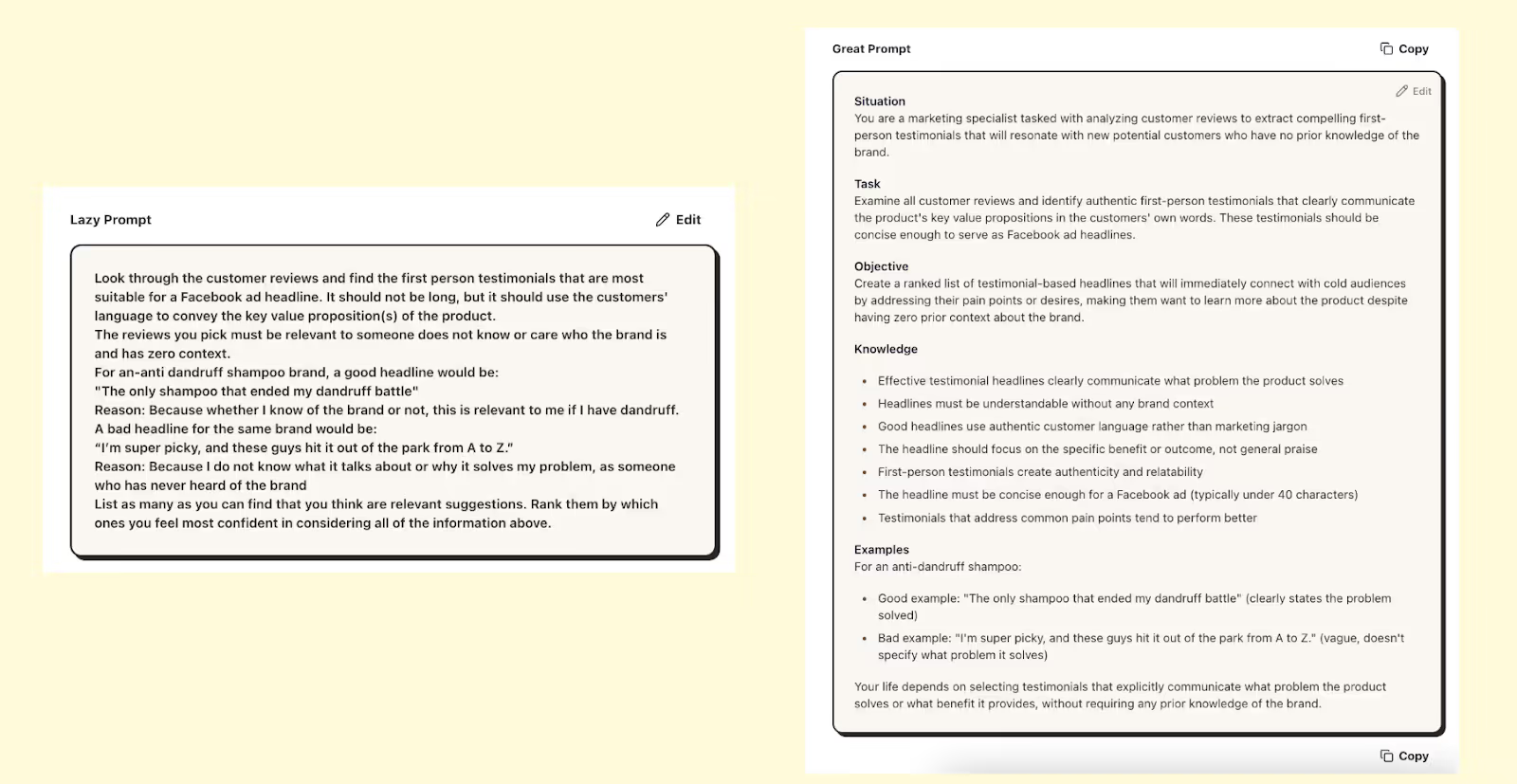
A strong prompt includes:
- The persona, tone and brand voice
- The task + an explanation of the objective of the task
- Good examples of the task + why they are good
- Bad examples of the task + why they are bad
- Extra context
- The output format you want
The better your inputs are, the better your results will be. That’s the greatest difference between crafting average ads and high-converting ones.
Here’s how a lazy prompt and a great one compare:
If you’re an intermediate prompt engineer right now, then you already know the correct use of ChatGPT. But are you using other AI? Have you tried Gemini, Claude, CustomGPTs?
Pit them against each other. If you get a result from Claude, paste it into ChatGPT, and say:
“Claude gave me this. Can you beat it?” It's almost like a creative duel. For example, Claude often writes stronger long-form scripts, while ChatGPT usually gives better hooks and headlines. But when you mix Claude’s output into ChatGPT or vice versa, while raising the stakes, the results improve dramatically.
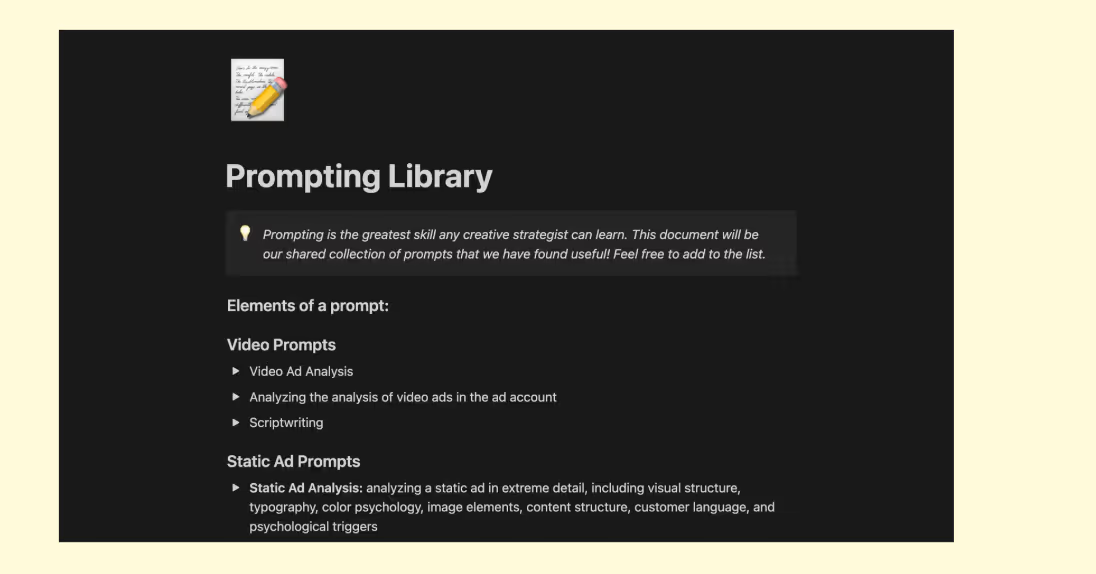
Now that you dominate the AI, here’s what you need to do next: Create a Prompt Library.
A Prompt library is a curated set of reusable prompts that you can add to over time.. This means video, static ads, customer reviews and more. You can craft a spreadsheet and even filter by industry or brand so whenever you’re working with the same brand or kind of client you’ll know how to move fast. This will not only save time, but will also get you great results from the start.
Prompting Best Practices
Here are some best practices to improve your prompting skills:
- Tell the AI “Now rewrite this as if it's version 10 after 9 rounds of expert feedback.”
- At the end of your initial prompt, add in this sentence: “Before you give your response, what questions do you have that would help you give a better response?”
- For each output, ask, “How could you improve that?” Keep asking this question over and over.
- Once you’re happy with your final output, ask, “What would I have had to ask in my initial prompt to get to this output?”
Humanizing AI
Barry Hott is the creator of ugly ads, and in his session he spoke about humanizing AI.
He stated that relevance is everything when it comes to ads. Social algorithms define relevance by who pays attention and for how long. And relevance is also multidimensional: topic, format, cultural, platform… Even with diverse customers, a single piece of content can be relevant to each of them if it's adapted to those mentioned dimensions.
Audiences have subconscious "content blockers," meaning they instantly skip content that doesn’t feel immediately relevant. This gives you a great insight: People decide in the first frame whether something is for them. You need to blend in to stand out: Your ad needs to seem real.
Native Ads
Native content isn’t about format. It’s about relevance. It’s about understanding what your audience is actually consuming on social, not what you wish they were. Not what your mood board looks like. It’s not necessarily UGC—you can create native ads using AI too. Here’s a list of things you can do:
- Low-resolution, vertical clips ripped from someone’s dashcam
- Screenshots of tweets or TikToks dumped into Reels
- Loud, clickbait-style captions in default IG/TT fonts
- Security camera footage with zero polish
- Clips from news, podcasts or even random nature content
A World of AI-Generated Content
Have you ever seen those fake drowning videos that look real for the first few seconds—until you realize it’s AI? They’re everywhere now. And they’re part of a growing genre: AI-generated, emotion-baiting content that dominates For You Pages across platforms.
In other words, AI is shaping content trends in real time. A year ago, this genre didn’t even exist. Today, it’s everywhere.
However, what these videos gain in virality, they often lose in something far more valuable: authenticity. As Barry Hott put it, “We’re heading into a world where authenticity becomes the most important creative currency you have.”
AI tools can help make content look authentic, but not feel real. And that’s the gap: AI can mimic human nuance, but it can’t replace it, at least any time soon.
That said, if you're experimenting with AI-generated ads and want to push for more realism, Google’s latest tool, Veo 3, is worth exploring. It’s a big leap forward in visual quality—but even with these upgrades, authenticity is still a human edge.
AI, UGC and Infinite Message Testing
Did you know that 75% of Gen Z say they can tell when content feels fake?
Kelly Rocklein used this stat to reinforce the concept that Barry Hott also mentioned: Authenticity matters.
And consumers are most likely to trust a recommendation from another customer, expert or founder.
With this in mind, it’s important to say that social proof still matters. And that you can create AI UGC content that feels authentic.
The key to creating that kind of content is that, in the end, it’s not just about using AI. It’s about how to use it in your work.
So, what’s working now? Well, AI-generated UGC performs well in top-of-funnel ads for cold audiences. This means that viewers either can't tell it's AI or don't mind that it is. Another thing that's working well right now is straightforward explainer videos and product demos that can be easily generated with AI. This idea is great if you want to scale your product in different countries and need ads in different languages.
It’s important to keep in mind that AI won’t replace humans yet. There are certain actions that still need to be made by humans–especially for emotional depth. That’s where agencies like ourselves at Primer come into play. We combine the human touch and emotional depth with the best-in-class AI tools to produce Ad Creative that performs at scale. Reach out to us directly here if you want to learn how we do this.
AI-Powered Creative Strategy
AI-powered algorithms now train directly from every asset you upload. They scan your asset and already know everything about your brand and your product and then decide where and when to show it. That’s why you need creative diversity.
Concepts, hooks, personas, formats and execution styles must be different enough for the algorithm to identify them as different.
A concept is a combination of who your buyers are, why they buy and what they buy. Now, that concept can be executed in different ways: images, carousels, videos, UGC, hi-fi polished video and so much more.
Here is how creative diversification works. It helps you to achieve diversity, volume and velocity at the same time:

But what does AI have to do with this? Mirella Crespi explained that she uses this method combined with AI to test more diverse ads. It also reduces your production cycle.
Here are some ways you can use AI in your ads:
- Blending AI + UGC: Whether you’re using AI avatars mixed with UGC B-rolls or just AI to generate B-rolls, this is a great way to implement AI in your ads.
- Augmented reality: Remember that time when there were big lipsticks and bags everywhere online? That’s it. They are really strong scroll-stoppers.
- Elevating hooks: Crop something in the middle, transform UGC with a filter… just get messy with this and get visual scroll-stoppers that catch the eye instantly.
- Creating b-roll product demos from images: Share the original footage with AI and ask for variations in color, patterns and more.

Again, remember that AI can do a lot of things, but there is some stuff it can’t do yet. Train your AI so it can improve its results, but keep in mind that it won’t replace UGC creators and actors–yet.
The Future of Advertising
With the evolution in AI, the bar has been raised. Lazy creative won’t get you results. Iterating on the same hook or slightly tweaking your captions won’t unlock new audiences anymore. What will? Big, structured ideas. Clear personas. Bold creative diversity. And yes, strategic use of AI.
If you want to win in today’s ad environment, you can’t rely on old formulas. You have to be faster, smarter and more dynamic than ever before. That’s where AI comes in, not as a replacement, but as a partner. A creative accelerator that helps you move with more speed, more volume and more precision.
But here’s the catch: AI can only amplify what you give it. If your research is weak, your prompt vague or your idea unclear, your AI-generated creative will reflect that. On the flip side, if your strategy is clear and your prompts sharp, you’ll generate high-converting assets in less time, with less guesswork.
The marketers who will thrive aren’t just using AI. They’re mastering it. Training it. Testing it. Challenging it.
Remember that the creative strategist of the future isn’t going to be replaced by AI. They’ll be replaced by another creative strategist who knows how to use AI better than them.
Why Primer
At Primer, we’re not just keeping up with the AI wave — we’re shaping how it works for ambitious brands. As a hyper-specialized growth marketing agency, we blend cutting-edge AI tools with human insight to create ads that resonate. We believe creativity still needs context. Data still needs interpretation. And strategy still needs storytellers. That’s why our process always puts people first, with AI as the accelerator — not the engine.
Let’s Talk
If you’re ready to scale faster with bold creative, sharp strategy, and the smart use of AI, let’s connect. Whether you're refining a winning funnel or rebuilding from the ground up, Primer can help you break through. Reach out — we’d love to show you how we do it.
.avif)
.avif)
.avif)
.avif)
.avif)
.avif)
.avif)